

Kōdō and Palo Santo: What Sacred Wood Really Means
How Japan's ancient way of incense explains why ceremonial-grade palo santo is never a commodity.
8 min readLas Lomas, Piura — Peru
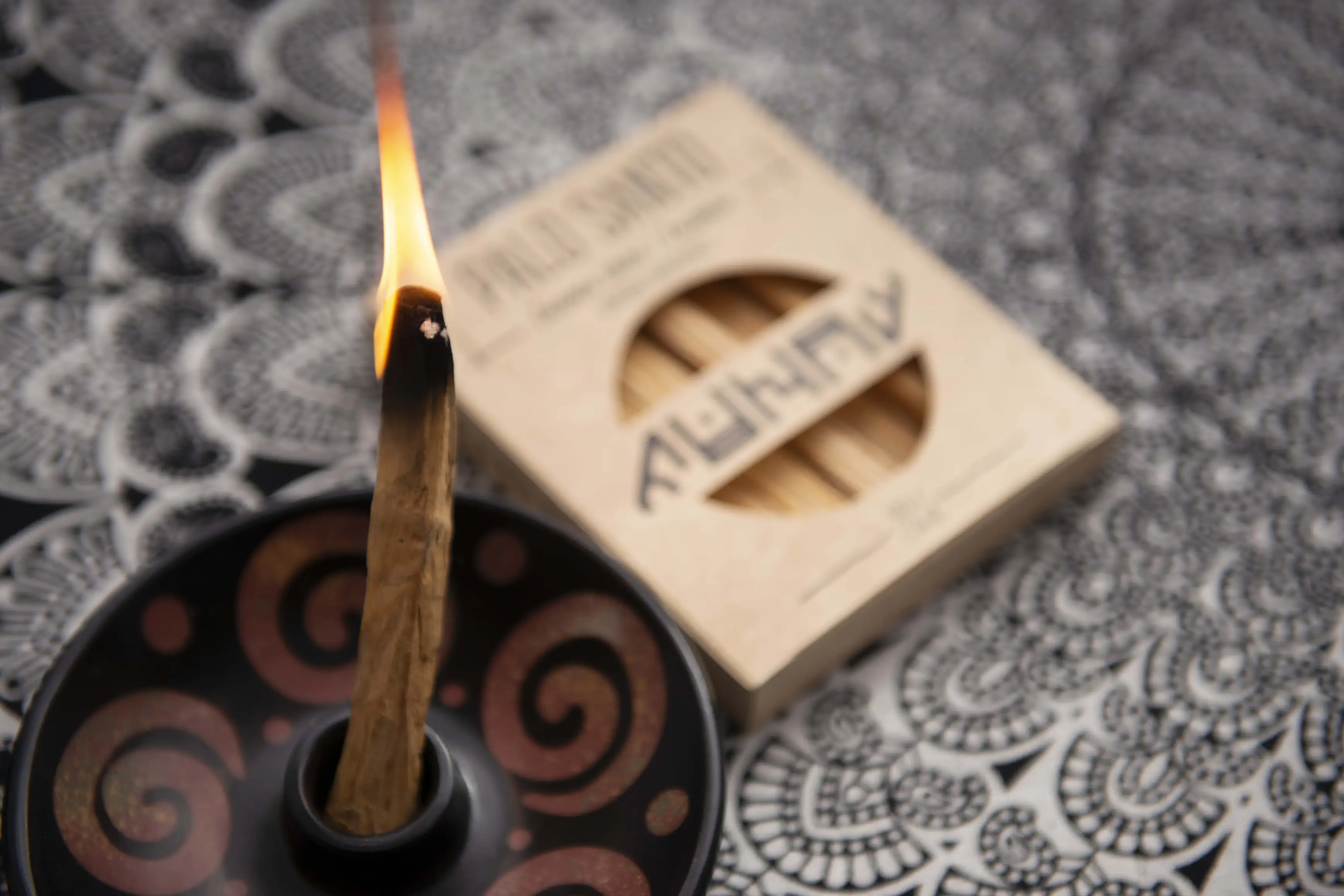
Palo santo is Spanish for “holy wood.” It comes from the Bursera graveolens tree of the Peruvian dry forests, and for generations it has been burned to clear a space and open a ritual. But its spiritual meaning was never separate from a physical fact: only wood that dies naturally and rests for years develops the resin — and the aroma — worthy of ceremony.
That is the part most people leave out. Today, young, rushed, or illegally cut wood is sold as “sacred” — and it strips the meaning from the very thing that made it holy. To understand why that distinction matters, it helps to look at a culture that turned aromatic wood into a documented discipline: Japan, and the art of Kōdō.
What does palo santo mean, and what is it used for?
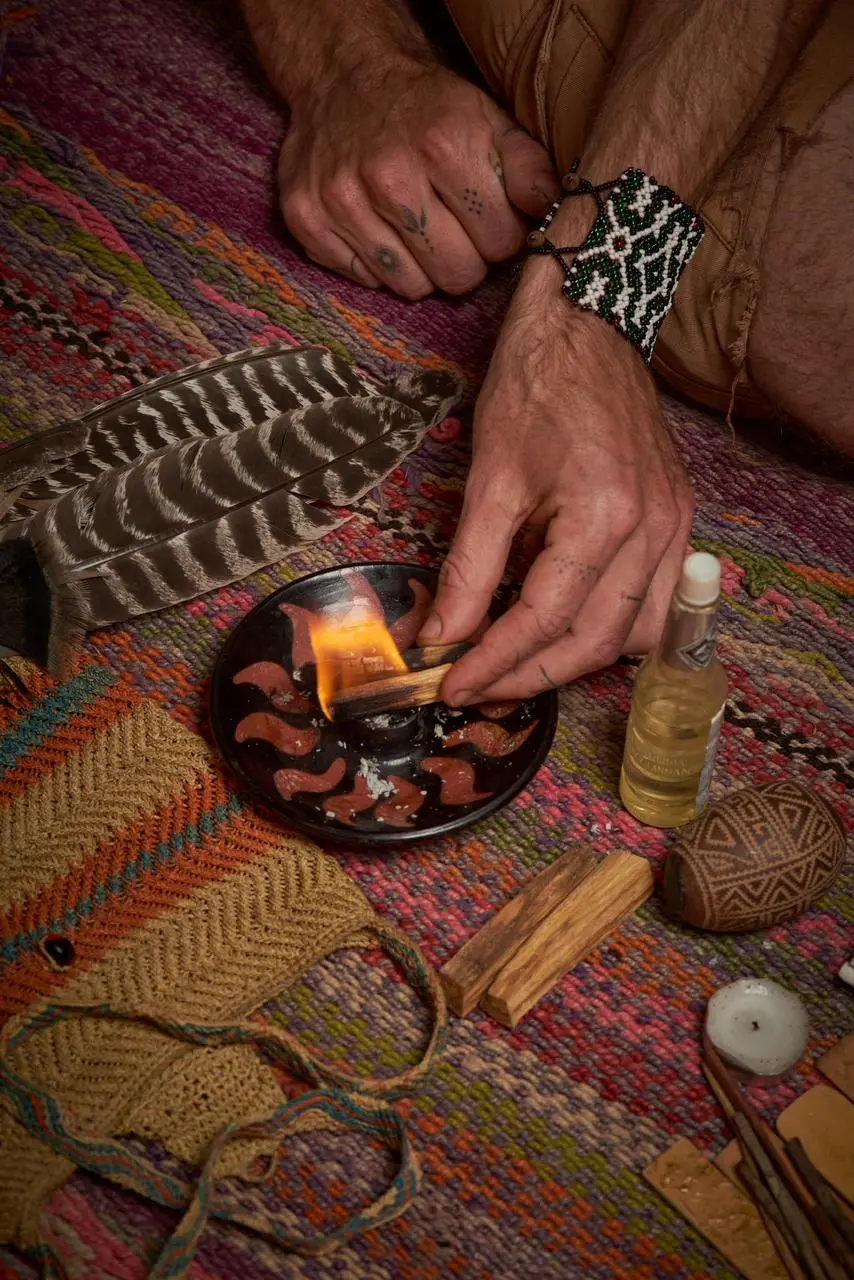
The name translates literally as “holy wood” or “wood of the saints.” Its spiritual meaning across the Andes is tied to three traditional uses: clearing stagnant or heavy energy from a room, grounding and calming the mind before meditation or prayer, and marking the start of a ceremony. This is the same family of aromatic resins as frankincense and myrrh — woods that cultures have treated as sacred precisely because their finest aroma cannot be rushed.
What people rarely ask is why some palo santo carries that depth and some does not. The answer is not folklore. It is resin, and resin is a function of how the wood lived and how long it aged.
Kōdō: Japan’s way of “listening” to wood
The oldest record of burning aromatic wood in Japan appears in the Nihon Shoki. In the year 595, a log of driftwood washed ashore on the island of Awaji. The fishermen who found it did not know what it was, so they used it as firewood — and the whole coast filled with an extraordinary fragrance. That wood was agarwood, and the encounter would grow, over centuries, into Kōdō: “the way of incense.”
Kōdō is not about scenting a room. It is the art of appreciating the aroma of noble woods with full attention. The ceremony happens in silence, on a tatami mat; a host places a tiny sliver of aromatic wood over a buried ember and guests take turns at monkō — “listening” to the incense. There are even memory games: in Genjikō, five aromas are compared; in Sanshukō, three. Two schools have transmitted these rules for generations.
The detail that matters for us is the Rikkoku — the classical system that sorts agarwood into six categories by origin and character. Japan did not treat aromatic wood as one thing. It treated it as a graded, documented material, where origin is part of the quality.
The same discipline, in Piura, Peru
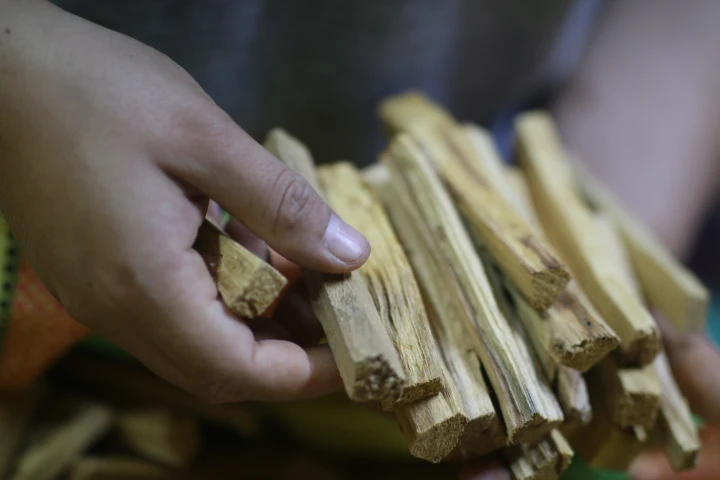
At Munay we recognized in Kōdō the same patience we already give palo santo. In Las Lomas, Piura, the wood falls on its own and waits in the forest until it is ready. We never cut living trees — we work only wood that has already matured. Classifying and documenting the origin of each piece, the way the Rikkoku system has for centuries, is its own form of respect: mature wood, honest origin, aroma that earned its name.
This is also why we are precise about provenance. Authentic, high-resin palo santo of ceremonial grade comes from the Peruvian dry forests and is governed by Peruvian forestry law (SERFOR). Our palo santo is Peruvian — from Piura — gathered from naturally fallen wood, aged and traceable. Origin is not a marketing line here; it is the specification.
The making of ceremonial grade
Why real palo santo takes years, not weeks
- StandingA living tree, never cutBursera graveolens grows slowly in the Peruvian dry forest. Living trees are never harvested — cutting one produces pale, sap-heavy wood with almost no aroma.
- Year 0Natural death and fallThe tree, or a branch, dies on its own and drops to the forest floor. This is where authentic palo santo actually begins.
- Years 4-10Curing on the forest floorThe fallen wood rests and cures on the ground for years. As it does, aromatic oils migrate and concentrate in the heartwood.
- ThresholdResin makes it ceremonialOnly after that long cure does the wood hold the high resin content that produces the deep, sweet, long-lasting smoke worthy of ritual.
- SelectionHand-graded and documentedIn Piura the wood is graded piece by piece and logged by origin — our version of the Rikkoku discipline.
This is why price is a signal: sticks that cost almost nothing rarely reflect a decade of aging or a legal, traceable supply chain. They usually reflect the opposite.
People also ask
Palo santo, white sage, and agarwood: how sacred woods compare
They are different plants with different roles — and in every case, quality is decided by how the material is sourced and aged, not by the name on the label.
| Palo Santo | White Sage | Agarwood (Kōdō) | |
|---|---|---|---|
| Botanical origin | Bursera graveolens — Peruvian dry forest | Salvia apiana — southwestern United States | Aquilaria — Southeast Asia |
| Traditional role | Open a ritual; invite calm and warmth | Clear or cleanse a space | Listening to aroma; meditation |
| Good grade comes from | Naturally fallen wood, aged for years | Sustainably gathered leaf bundles | Resin formed over years to decades |
| What decides quality | Resin from natural death plus aging | Leaf oil and freshness | Resin depth — graded by Rikkoku |
| Sustainability flag | Avoid live-cut or illegal wood; choose SERFOR-documented | Watch for overharvesting | Highly protected (CITES-listed) |
The through-line: sacred woods across cultures share one rule — the finest material is the one that was allowed to mature, and whose origin can be proven.
Why ceremonial grade matters — to you, and to a brand
For anyone burning palo santo at home, grade is the difference between a warm, resinous, long-lasting smoke and a thin or burnt one. High-resin wood lights easily, holds its ember, and releases the sweet citrus-and-wood aroma the tradition describes. That is what to look for when you choose high-quality palo santo.
For a brand, a spa, or an importer, the same fact becomes a business decision. Palo santo can support a genuinely premium, story-rich positioning — the way agarwood does in Japan — but only if the grade can be documented. Without proof of natural-fall gathering, aging, legality, and origin, a “premium” claim is just a price tag. With that documentation, it becomes a product a brand can defend.
How to recognize ceremonial-grade palo santo
- The unlit scentReal ceremonial grade is fragrant before you even light it — sweet, resinous, citrus-forward. Faint or dusty wood is young or over-dried.
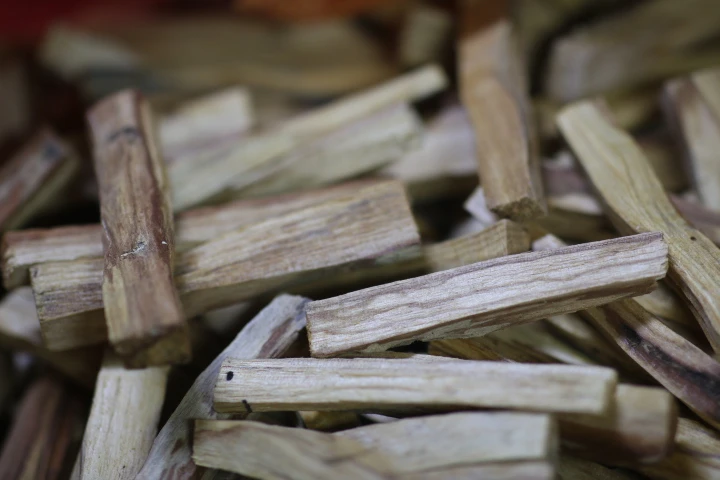
- The wood itselfDense, slightly oily, with visible resin lines. Pale, dry, perfectly uniform sticks usually mean low resin.
- The burnIt lights easily, the ember holds, and a single stick can be relit many times.
- The smokeWarm, sweet and long — not sharp, acrid, or campfire-burnt.
- The paperworkOrigin region, proof of naturally fallen wood, and SERFOR documentation. This is the one a home buyer can skip — and the one a brand never can.
People also ask
- What is palo santo used for spiritually?
- To cleanse a space of heavy or stagnant energy, to ground and calm the mind for meditation, and to open a ritual — a use documented among Andean communities for generations.
- Is palo santo better than sage?
- They complement rather than compete: sage is often used to clear, palo santo afterward to invite calm and warmth. The bigger variable is not the wood type — it is grade and origin.
- Why is palo santo so powerful?
- Because of the resin. Its aromatic oils concentrate only after the tree dies naturally and cures for years. Young or rushed wood simply does not carry the same depth.
- What do you say when you burn palo santo?
- There is no fixed formula. Many set a simple intention — gratitude, release, or a clear purpose for the space — as they light it. The tradition is about attention, not a script.
- What do the colors of palo santo mean?
- Color reflects resin and aging more than mysticism: denser, darker, oilier wood generally indicates a higher, more aromatic grade.